

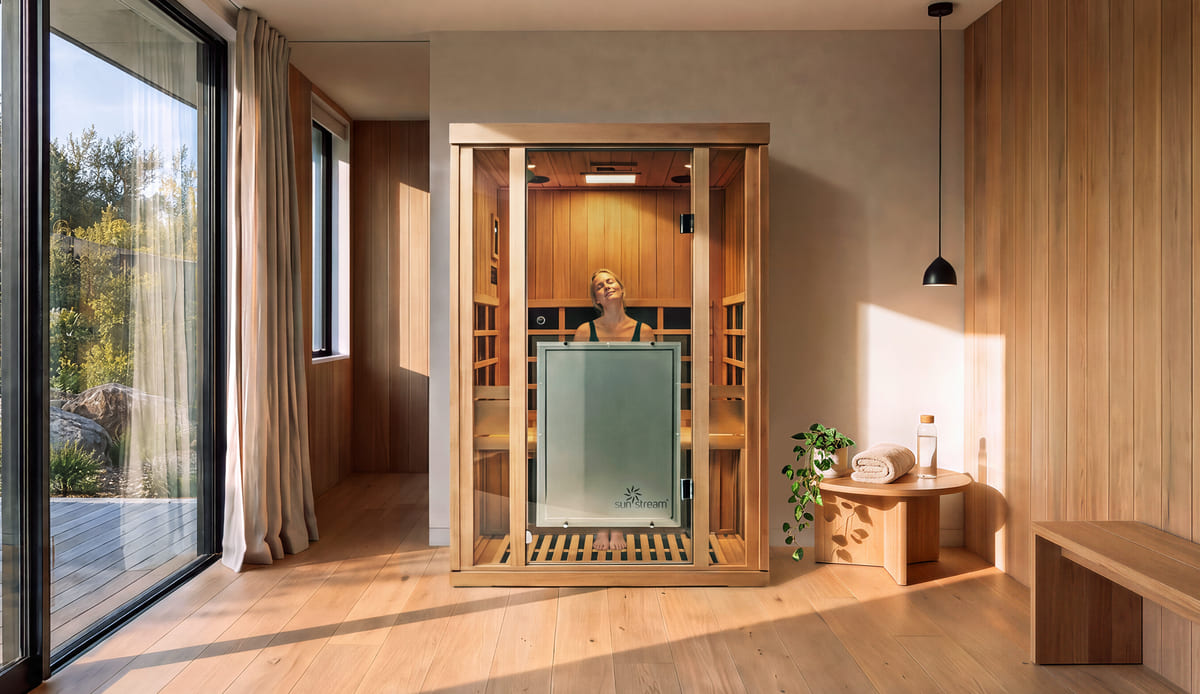
Not all infrared saunas are designed to deliver heat in the same way. And when comparing infrared saunas, maximum temperature is only part of the story.
If you’re researching infrared saunas, you’ve probably encountered plenty of specifications: maximum temperature, heater wattage, infrared wavelengths and cabin dimensions. But there’s an important question that often gets overlooked:
How effectively is the sauna designed to deliver infrared energy to your body?
Two infrared saunas can reach similar cabin temperatures yet provide noticeably different heating experiences.
The difference can come down to details that aren’t immediately obvious from a product specification sheet — including heater placement, heater guards, infrared coverage and even the location of the temperature sensor.
Understanding these design considerations can help you make a more informed purchasing decision.
1. Infrared Sauna Temperature: Are You Comparing the Wrong Thing?
Traditional saunas primarily heat the surrounding air, which then transfers heat to your body. Infrared saunas work differently. Their heaters emit infrared radiation that can transfer energy directly to your body, alongside heating the air and surrounding surfaces.
This distinction is important.
While cabin temperature contributes to the overall experience, it doesn’t tell you everything about the infrared energy reaching your body. A sauna that reaches a higher air temperature isn’t necessarily delivering more useful infrared energy to the person sitting inside.
The better question isn’t simply how hot the cabin gets, but how effectively the sauna delivers heat to your body.
Watch: Are You Comparing Infrared Saunas the Wrong Way?
Discover why maximum cabin temperature alone isn’t the best way to evaluate infrared sauna performance.

2. Heater Guards: What’s Between You and the Infrared Energy?
One of the most overlooked differences between infrared saunas is how their heater panels are covered. Some infrared saunas use fabric coverings over their heaters. These may create a neat, uniform appearance, but the covering material can also absorb or interfere with some of the infrared radiation emitted by the heater. The extent of that effect depends on the material and heater design.
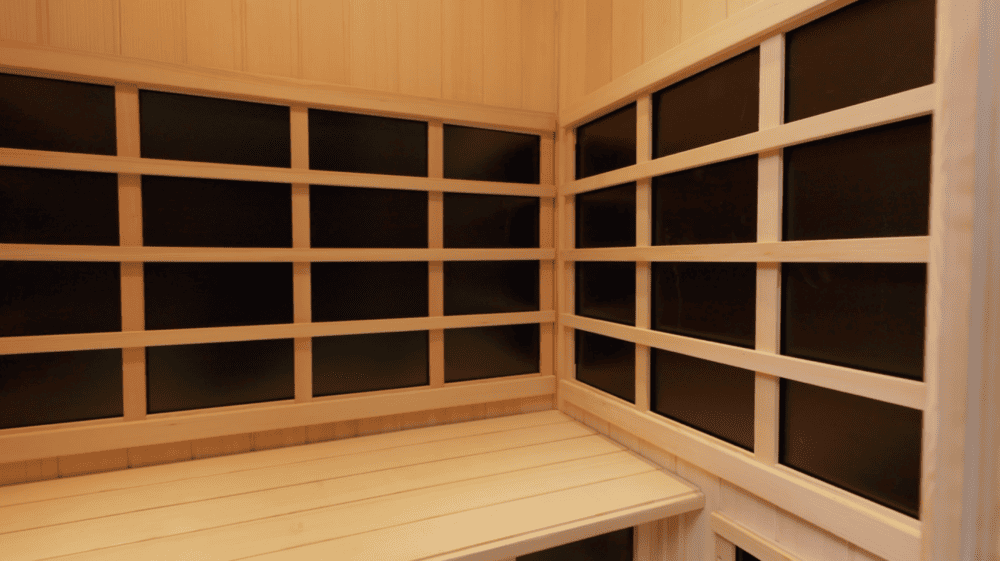
At Sun Stream, we take a different approach.
Our infrared heaters are positioned behind open timber guards, designed to provide physical protection while minimising obstruction between the heating surface and your body. Rather than placing a continuous fabric layer across the heater, the open design allows infrared energy to travel through the spaces between the timber guards. It’s a relatively simple design decision, but an important one when your objective is effective infrared delivery.
What to look for: When comparing infrared saunas, investigate whether the heater surfaces are covered and how those coverings may affect infrared transmission.
3. Heater Placement: Is the Energy Going Where It’s Needed?
Heater positioning is another important factor in infrared sauna design.
Consider where your body is located during a typical sauna session. You’re sitting on a bench, with much of your body positioned in the lower and middle sections of the cabin. Yet heater layouts vary considerably between sauna brands.
At Sun Stream, we deliberately position our heaters lower in the cabin, concentrating infrared delivery towards the areas occupied by your body. Our approach is to prioritise direct body coverage rather than simply heating the upper sections of the cabin. This is particularly relevant because warm air naturally rises, while infrared radiation travels from the heater towards the surfaces it reaches.
A thoughtfully designed infrared sauna should consider where the user sits, the direction the heaters face and how much of the body receives direct infrared exposure.
Learn more about what to consider when choosing an infrared sauna
4. Why 360° Infrared Coverage Matters
Many infrared saunas primarily position heaters behind the user, with additional panels sometimes located along the sides or beneath the bench. But what about the front of your body?
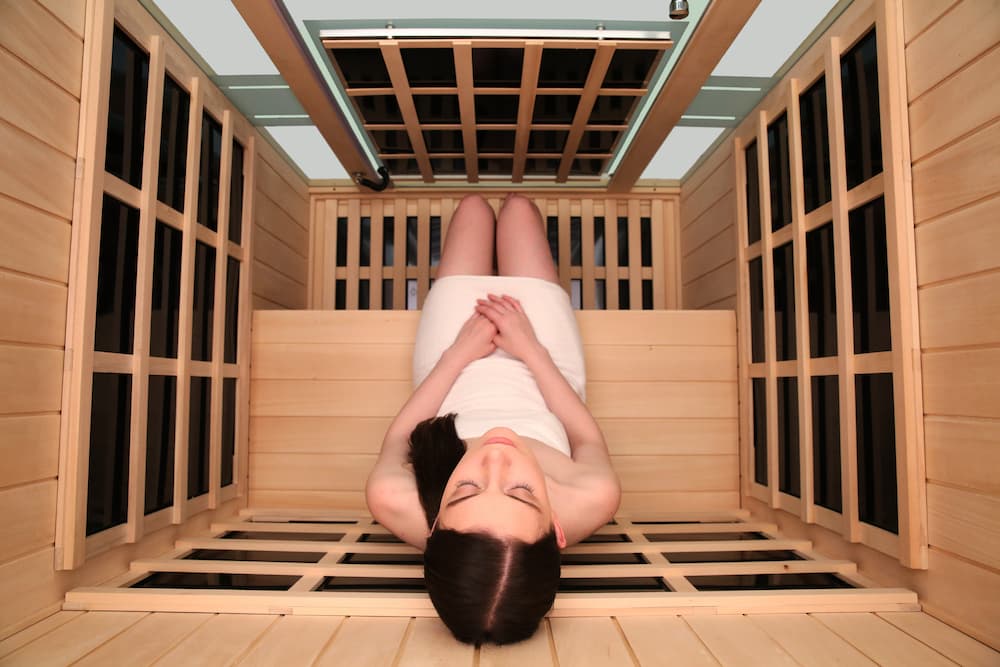
Sun Stream’s Evolve Series incorporates front-facing infrared heaters, creating our 360° infrared coverage design. By positioning heaters around the user, including at the front of the cabin, the Evolve Series is designed to deliver infrared energy from multiple directions. This provides more comprehensive body coverage than a layout relying primarily on rear-facing heaters.
Rather than depending on one direction of infrared exposure, the design surrounds the seated user with multiple heating surfaces.
What to look for: Don’t simply count the number of heaters. Look at where they’re positioned, which direction they face and how effectively they cover the seated body.
5. Why Some Infrared Saunas Don’t Feel Hot Enough
One of the most common criticisms of infrared saunas is that they don’t get hot enough. But is that really a limitation of infrared technology? Not necessarily. A poorly designed infrared sauna may provide an underwhelming heating experience, even if its published specifications appear impressive.
Several factors can contribute, including:
- Heater placement that provides limited direct body coverage.
- Heater coverings that reduce infrared transmission.
- Insufficient heating power relative to cabin size.
- Temperature control systems that interrupt heater operation before the desired heating experience is achieved.
These factors help explain why two infrared saunas with similar maximum temperature ratings can feel very different in practice. If you’re comparing different manufacturers, our infrared sauna brand comparison page can help you evaluate the differences.
Watch: Infrared Saunas Don’t Get Hot Enough? Here’s Why!
Learn how heater design, infrared coverage and temperature sensor placement can influence your sauna experience.
6. Temperature Sensor Placement: A Detail Most Buyers Overlook
Every temperature-controlled infrared sauna needs a way to measure cabin temperature.
But where that temperature is measured can influence how the sauna operates. Warm air rises, meaning the temperature near the ceiling can be higher than the temperature at seated body height. If a sauna’s temperature sensor is mounted high in the cabin, it may register a higher temperature than the air temperature around the seated user.
Once the measured temperature reaches the thermostat’s set point, the control system may reduce or interrupt heater output. This is normal thermostat behaviour, but the position of the sensor can influence when that happens.
The Sun Stream approach
At Sun Stream, our temperature sensor is positioned lower in the cabin, beneath the control panel and closer to the seated user. This is intended to provide a temperature reading more representative of the air surrounding the person using the sauna.
It also influences how the thermostat responds as the cabin warms. By avoiding a sensor position close to the hottest air accumulating near the ceiling, the design can help prevent premature cycling associated with an upper-cabin temperature reading.
Our objective is to support sustained infrared heating during the session, while maintaining the sauna’s temperature control and safety functions.
7. Power Concentration: Why Total Wattage Doesn’t Tell the Whole Story
Another common mistake when comparing infrared saunas is looking only at total heater wattage. A larger sauna naturally requires more heating power than a smaller one, so comparing wattage figures without considering cabin size can be misleading.
A useful additional measurement is power concentration, expressed as watts per cubic foot (W/ft³) of internal cabin volume. This is calculated by dividing the sauna’s total rated heating power by its internal volume.
For example, Sun Stream’s Evolve 20 has a power concentration of approximately 31 W/ft³, based on its published internal dimensions and 2,080-watt rating. This provides a useful way to compare the installed heating power relative to cabin size.
However, power concentration is not a complete measure of infrared performance. Heater efficiency, positioning, coverage and temperature controls also influence the overall experience. A high wattage figure alone cannot guarantee effective infrared delivery.
What to look for: Compare power concentration alongside heater positioning, body coverage and the overall design of the sauna.
8. The Sun Stream Design Philosophy
At Sun Stream, we’ve focused on infrared sauna design from a straightforward perspective: Deliver infrared energy effectively to the person using the sauna.
This philosophy influences the way we position our heaters, design our heater guards, arrange infrared coverage and control cabin temperature.
Our Saunas incorporate:
- Open timber heater guards designed to minimise obstruction of infrared radiation.
- Strategically positioned heaters targeting the seated body.
- High power concentration relative to cabin size.
- Front-facing heaters for 360° infrared body coverage. (Evolve Series)
- Lower-positioned temperature sensors designed to measure air temperature closer to the user.
Each design element serves a purpose. And together, they contribute to the heating experience that Sun Stream infrared saunas are designed to provide.
9. Frequently Asked Questions About Infrared Sauna Performance
If your infrared sauna doesn’t feel hot enough, the issue may be related to heater placement, infrared coverage, heating power or temperature control. Some saunas have heaters positioned away from the body or covered with materials that reduce direct infrared transmission. A well-designed infrared sauna focuses on delivering heat effectively to the person using it, not simply increasing the cabin’s air temperature.
Many home infrared saunas operate within a temperature range of approximately 40–65°C, although this varies between models. Sun Stream infrared saunas offer adjustable temperature settings up to 65°C. However, the maximum temperature alone doesn’t determine how effectively the sauna heats your body. Heater positioning, infrared output and body coverage are also important considerations.
No. A higher cabin temperature doesn’t automatically mean a better infrared sauna. Infrared heaters transfer energy directly to the body, while the surrounding air also contributes to the heating experience. Two saunas operating at the same air temperature may feel quite different depending on their heater design, positioning and infrared coverage.
Yes. Infrared radiation travels from the heater towards the surfaces it reaches, making heater placement an important design consideration. Heaters positioned closer to the seated body can provide more direct infrared exposure. Sun Stream positions its heaters strategically around the lower and middle sections of the cabin to target the areas occupied by the user.
Fabric coverings can absorb, reflect or transmit infrared radiation depending on their material and construction. This means some coverings may reduce the amount of direct infrared energy reaching the body. Sun Stream uses open timber heater guards designed to provide protection while minimising obstruction between the heaters and the user.
360-degree infrared heating refers to a sauna heater arrangement designed to provide infrared exposure from multiple directions around the seated user. Sun Stream’s Evolve Series incorporates rear, side and front-facing heaters to provide more comprehensive body coverage than layouts relying primarily on heaters behind the user.
Temperature sensor placement influences how a sauna measures and regulates cabin temperature. Because warm air rises, a sensor positioned near the ceiling may register a higher air temperature than one located closer to seated body height. Sun Stream positions its temperature sensor lower in the cabin, beneath the control panel, to provide a reading more representative of the air temperature around the user.
Infrared sauna heaters may cycle on and off as the temperature control system maintains the selected cabin temperature. Once the sensor detects that the set temperature has been reached, the controller may temporarily reduce or interrupt heating. The sensor’s location, thermostat settings and cabin conditions can influence how frequently this occurs. Some cycling is normal and is part of the sauna’s temperature regulation.
The appropriate wattage depends on the sauna’s internal dimensions, heater design and intended performance. Total wattage alone can be misleading when comparing differently sized cabins. One useful measurement is power concentration, expressed as watts per cubic foot (W/ft³) of internal cabin volume. However, heater placement, efficiency and body coverage should also be considered.
Look beyond maximum temperature and total heater wattage. Important considerations include heater placement, infrared coverage, heater guard design, power concentration, temperature sensor location, construction quality, electrical safety and warranty support. Comparing these features will help you understand how each sauna is designed to perform and which model best suits your requirements.
“Need help comparing infrared sauna brands? Sun Stream offers a free sauna comparison service to help you evaluate different models and specifications.”
10. Choose an Infrared Sauna Designed for Performance
Buying an infrared sauna is an investment in your home and wellbeing. Before making that investment, take the time to look beyond the headline specifications. Ask about heater design, body coverage, power concentration and temperature control.
Most importantly, understand how the sauna is designed to deliver infrared energy to your body. Because when it comes to infrared sauna performance, thoughtful design matters just as much as the numbers on the specification sheet.
Explore Sun Stream Infrared Saunas
Discover the Evolve and Ascend Series and see how our approach to infrared sauna design comes together. Have questions about choosing the right infrared sauna? Contact our team for practical advice on selecting the model that best suits your home and requirements.